

COPYRIGHT PROTECTION FOR SHOES, JEWELLERY, FURNITURE? In Italy you can!
By Guest Author: Carlo Sala
Ski Season is nearly upon us! And nothing says après-ski like Moon Boots, the iconic footwear created by Italian shoemaker Tecnica Group in 1969, after the Apollo 11 moon landing. Since then, the boots have enjoyed several waves of popularity as each generation rediscovers their classical style. In fact, in 2000, the Louvre Museum in Paris, France showcased a pair of Moon Boots as one of the 100 most iconic items of the 20th century. And in 2018, the Museum of Modern Art (MoMA) in New York placed a pair of Moon Boots in its permanent art collection.
Even more impressive, is that, as a consequence, Moon Boots are protected by copyright law in Italy. Generally, copyright law protects original works from unauthorized copying. In the U.S., copyright protection generally does not extend to “useful” articles, like shoes, but can protect the designs on shoes, like that of the Yeezy Boost 350 sneakers. However, in Italy, the global fashion powerhouse since the 15th century, copyright law can protect shoes—like Moon Boots.
Italy is a member of the European Union, which has been attempting to harmonize its copyright laws among its Member States. EU Member States are entitled to protect product designs (meaning the appearance of the whole or a part of a product, like the product’s lines, contours, colors, shape, texture and/or materials and/or its ornamentation). But it is up to each Member State, if willing, to grant copyright protection to product designs, and to determine the conditions and scope of copyright protection for product designs.
In Italy, birthplace of the Moon Boots, copyright protection extends to works of industrial design that have inherent “creative character and artistic value.” This means that industrial design works can benefit from copyright protection provided they have creative character (meaning they are an original expression of the author and are an expression of the author’s personality even if they have been inspired by another existing work), and they have an artistic value. Indeed, who decides what has “artistic value” and how?
The Court of Milan had the opportunity to shed some light on this issue. The designer (and well-known Italian influencer) Chiara Ferragni was making and selling “snow boots” that were nearly identical to Tecnica’s famous Moon Boots, and Tecnica sued for copyright infringement. The Court held that the Moon Boots were protected by copyright, in part, due to the “artistic value” of the design. The Court stated that when looking for “artistic value” the judge should look at the cultural sector. The fact that the Moon Boots had been displayed by major museums such as the Louvre and MoMa was decisive to establish their artistic value. The Court held that Chiara Ferragni’s snow boots were infringing and ordered her to stop selling her snow boots and pay Tecnica damages.
However, Italian design, and Italian copyright protection, extends beyond clothing and footwear to other consumer items, and the tendency is to enlarge the scope of protection of copyrightable designs to make it compatible with the existing case law of the European Court of Justice, which is the court that gives preliminary rulings concerning the interpretation of the acts of the EU bodies. Below are examples of designs that are protected in Italy under copyright rules:


Moon Boots LC2 Le Courboisier Armchair
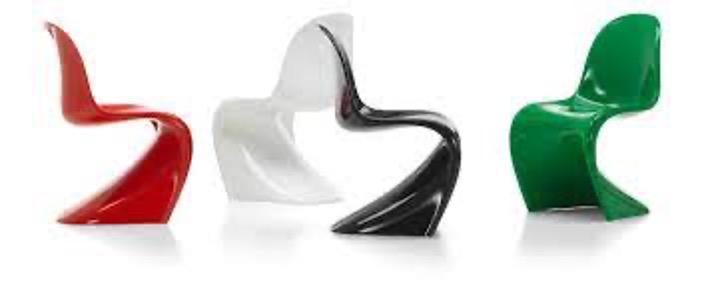 Panton Chair

Fishman Stewart garners repeat recognition by U.S. News & World Report and Best Lawyers® as a tier-one law firm on its annual list of “Best Law Firms”
· Litigation – Intellectual Property
· Litigation – Patent
· Patent Law
· Trademark Law
The 2023 “Best Law Firms” ranking for Fishman Stewart is available here. More information on the 2023 “Best Law Firms” methodology is available here. In addition to U.S. News & World Report, the national and metro Tier 1 rankings will also be published in print in the 13th Edition of “Best Law Firms.”

Car enthusiasts are buzzing about Alfa Romeo's latest SUV which is also its first EV (plus a hybrid option). Initially branded as “Milano,” the name was changed to "Junior" after it was announced that the car would be produced in Poland.

The online word game Wordle was created in 2021 by Josh Wardle and quickly rose in popularity. Players receive a new puzzle daily with six chances to correctly guess a five-letter word of the day with limited clues.
In a recent decision, the U.S. Court of Appeal for the Eighth Circuit affirmed a jury verdict holding that the use of the "Success Kid" meme by a congressman's reelection campaign for fundraising purposes did not qualify as fair use.
In February 2024, proposed legislation was introduced in US House of Representatives which would extend copyright protection to golf courses. The bill is titled “Bolstering Intellectual Rights against Digital Infringement Enhancement Act” or the “BIRDIE Act”.

OpenAI recently held a live demonstration of a new ChatGPT version that included the use of an AI personal assistant voice dubbed “Sky.” Many observers compared Sky to Scarlett Johansson’s voice in the 2013 Spike Jonze romantic sci-fi film “Her,” which centers on a man who falls in love with the female voice of his computer’s operating system.
June is Pride Month, which honors the 1969 Stonewall Uprising in Manhattan and recognizes the impact that lesbian, gay, bisexual, and transgender (LGBTQ+) individuals have had on history locally, nationally, and internationally. The United States Patent and Trademark Office flies the Pride Flag and promotes the Pride community’s contributions with programming offered annually.

First-time inventions have led inventors to great successes throughout history, sometimes immediately, sometimes after several more attempts at more useful inventions. In the U.S., two very famous inventors with contrasting first-time experiences are Thomas Edison and Alexander Graham Bell.
June is Pride Month. This year we are celebrating with some IP tips for drag performers! Drag performers can protect their intellectual property by registering the copyrights in their original works of music, choreography, and comedy sketches.

Bands often start out as creative endeavors among friends, and bands may not prove lucrative for many years, if at all. Until bands break up, thought and planning may not be given to who is the owner of the band names and entitled to use them going forward.
You’re rarely more than a few yards from Finny’s favorite chips, semiconductor chips to be precise. But what exactly is a semiconductor chip?